
Fascia Release: A New Approach to Menopause Stiffness
Jul 29, 2026You stretch and maybe even practice yoga. Perhaps you've also treated yourself to the occasional massage…and yet your shoulders still feel tight. Your hips seem permanently stiff. You wake up each morning feeling as though your body has aged overnight.
If that sounds familiar, you're certainly not alone, but what if the problem isn't that you're not stretching enough? What if there's simply a missing piece of the puzzle? That missing piece could be fascia release.
For years, I believed I simply needed to stretch more. As a yoga teacher, I knew stretching was essential for maintaining flexibility in menopause, but the knots across my shoulders kept returning, my hips constantly felt tight and massage only brought temporary relief.
Then I discovered fascia release. It’s completely changed the way I think about movement in menopause - not because stretching isn't valuable (it absolutely is), but because I'd discovered an important piece of the puzzle.
Why does menopause make us feel so stiff?
Menopause brings many changes to our bodies, and unfortunately our muscles and connective tissues don't escape them.
As estrogen declines, collagen production reduces, our tissues become less hydrated, and we naturally lose some elasticity. Add to that the effects of modern life - hours sitting at a desk, disrupted sleep patterns, too much sitting and increased menopause stress - and it's no wonder our bodies begin to feel tighter than they once did.
In fact, it’s not uncommon for women to notice increased menopause shoulder pain, morning stiffness, menopause hip pain and reduced flexibility, tight feet and maybe even plantar fasciitis, and increasing menopause joint pain.
It's easy to assume this is simply an inevitable part of ageing - however, that's not the whole story.
What is fascia?
Fascia is one of the most fascinating parts of the body - and one that many people have never heard of.
Think of fascia as an invisible web of connective tissue that wraps around every muscle, bone, joint, nerve and organ in your body. It's your body's internal support system, holding everything together while allowing it to move smoothly.
Healthy fascia is soft, hydrated and designed to glide effortlessly as you move. However, when fascia becomes less mobile or dehydrated, those smooth gliding movements can become restricted. Instead of feeling fluid and comfortable, certain areas begin to feel tight, stiff or resistant - even if the muscles themselves are being stretched regularly.
What is fascia release?
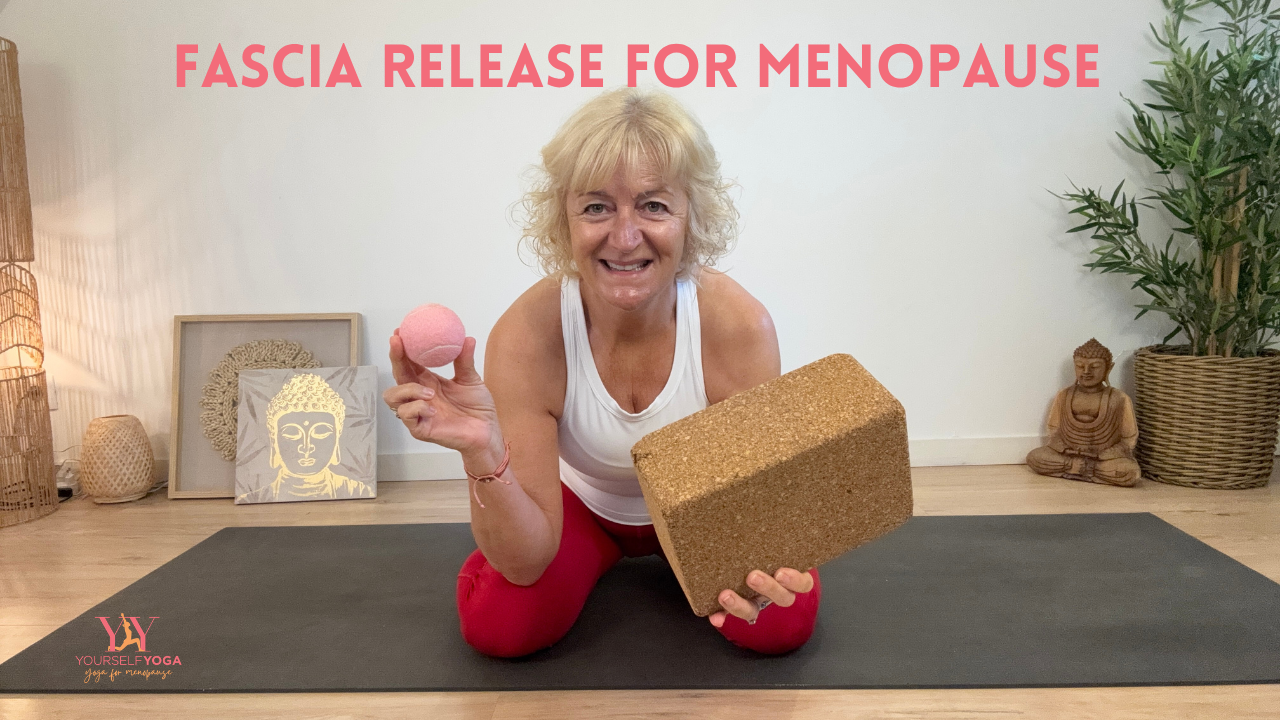
Fascia release, sometimes called Myofascial Release (MFR), is a gentle technique that applies sustained pressure to areas of tightness in the body using simple tools such as yoga blocks and tennis balls.
The aim of MFR is simple: to pause, breathe and allow the tissues time to soften. It can be surprisingly relaxing, and many women describe feeling lighter or freer after just a few minutes.
The beauty of fascia release is that it doesn't require expensive equipment or long sessions. Even just a couple of minutes can make a noticeable difference when practised regularly.
Fascia release in menopause
Having encountered countless women who struggle with stiffness and menopause joint pain, I've become increasingly passionate about combining fascia release with yoga. By combining the two (practicing fascia release before stretching), we can help the tissues move more freely before asking the muscles to lengthen.
The areas where we use fascia release the most tend to be the places where we hold the effects of everyday stress. These include the shoulders and upper back, hips, glutes and hamstrings, calves, feet, jaw and temples, and lower back.
Our bodies are wonderfully adaptable, but they also remember how we sit, stand, work and respond to pressure. Over time, that tension can accumulate and leave us feeling restricted in ways we often accept as "normal." But it doesn't have to stay that way.
If you'd like to experience it for yourself, I've created a short YouTube video that focuses on upper back and shoulder tension - a area that troubles so many women during menopause. Click below and discover how just a few minutes of gentle fascia release can help ease those stubborn areas that stretching alone often struggles to reach.
Fascia Release and Yoga
One of the questions I'm often asked is whether fascia release replaces yoga for menopause. Not at all. In fact, I believe it's the perfect partner for yoga, and particularly Yin yoga - a passive style of yoga that also targets fascia.
When practiced before any yoga class, fascia release helps to ease areas of restriction before movement of the muscles is introduced. Or, as in the case of Yin, it helps add the body to open preparing for longer held, supported stretches.
But Myofascial Release is its own practice and can be practiced after a yoga session too, or even as a standalone practice when you just want to target one area of tightness in the body.
What results can you expect?
Everyone's body is different, so it's important to have realistic expectations. Some women notice an immediate sense of ease after a fascia release session. Others find that their yoga practice suddenly feels more comfortable because they're able to move more freely into familiar poses.
With consistent practice, however. many women report less stiffness, improved flexibility, easier movement throughout the day, and a greater sense of freedom in their bodies.
For me personally, it's transformed the way I approach movement. I no longer see fascia release and menopause yoga as separate practices. They work together to help your body move with greater ease than either practice can achieve alone.
Menopause isn't about accepting increasing stiffness as your new normal. With the right approach, it's entirely possible to move well, feel stronger and rediscover the freedom your body is capable of.
New to menopause yoga? Start a home yoga practice with my FREE 3-day video series – The Menopause Flexibility Blueprint.
About Julie Ann Garrido:
After menopause symptoms disrupted her life, Julie Ann Garrido turned to yoga and found a natural solution that restored her energy, confidence, and wellbeing - a solution that she'd been searching for over many years.
After certifying as one of only 700 menopause yoga teachers worldwide, Julie embarked on helping other women and created an online yoga for menopause membership that brings affordable, beginner-friendly yoga directly to their home.
Julie's mission is clear: to help women navigate menopause with yoga and other natural solutions and to help them feel better FAST.
